Chapter 4: Classical Antiquity: Greco-Roman World & Mediterranean Systems
1. The Greek Polis & Democratic Experiments
Classical Greece (c. 5th–4th century BCE) represented a constellation of fiercely independent city-states (Poleis), among which Athens and Sparta offered contrasting political architectures:
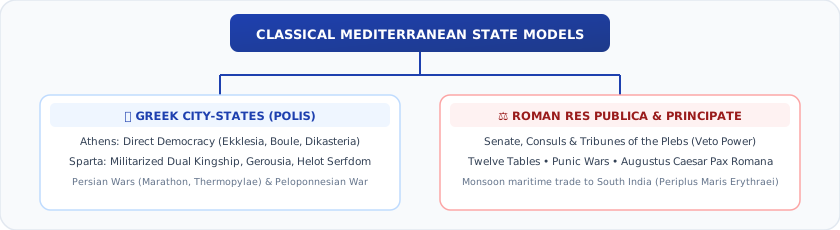
- Athenian Direct Democracy: Institutionalized by Solon, Cleisthenes (508 BCE), and Pericles. The sovereign body was the Ekklesia (assembly of male citizens), supported by the Boule (Council of 500 selected by lot) and judicial courts (Dikasteria).
- Spartan Oligarchic Dual Kingship: A militarized society controlled by two hereditary kings, the Gerousia (Council of 28 elders), five elected Ephors, and an underclass of state-owned serfs (Helots).
2. The Roman Republic to the Principate
- The Struggle of the Orders (494–287 BCE): Plebeians secured institutional protections through the Tribunes of the Plebs (wielding Veto power) and the codification of the Twelve Tables (450 BCE).
- Fall of the Republic & Rise of the Principate: Following the Punic Wars against Carthage, social polarization, slave revolts (Spartacus), and the First/Second Triumvirates culminated in Octavian (Augustus) establishing the Pax Romana in 27 BCE.
3. Indo-Roman Oceanic Trade & Numismatic Influx
The discovery of the monsoon winds by Hippalus (c. 45 CE) sparked direct oceanic commerce between Roman Egypt (Berenike, Myos Hormos) and South Indian ports (Muziris, Arikamedu, Korkai).
::: insight Pliny’s Lament on Roman Bullion Drain In his Naturalis Historia, Roman historian Pliny the Elder lamented that Rome lost over 50 million sesterces annually to India for luxury goods: black pepper (Yavanapriya), fine muslin, pearls, and malabathrum. :::
Check Your Mastery
⚡ Concept Quick-CheckTest Your Conceptual Intuition
Which ancient Greco-Roman navigational manual of the 1st century CE provides the most exhaustive contemporary account of Indian ports, exports, and imports?