Chapter 1: Early Medieval State Formation & The Feudalism Debate
1. The Indian Feudalism Historiographical Debate
The socioeconomic character of post-Gupta India (c. 600–1200 CE) remains one of the most vigorously contested themes in South Asian historiography.
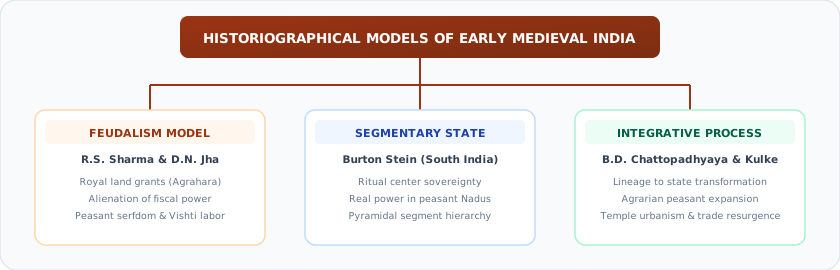
The Sharma-Mukhia Debate: Was there Indian Feudalism?
- R.S. Sharma's Thesis (Indian Feudalism 1965): Argued that extensive royal land grants (Bhumichhidra-nyaya) to Brahmins and secular vassals alienated fiscal and judicial sovereignty, resulting in serfdom (vishti / forced labor), peasant subjection, urban decay, and demonetization.
- Harbans Mukhia’s Counter-Critique (Was There Feudalism in Indian History? 1981): Argued that Indian peasants retained direct control over the labor process and means of production (unlike European manorial serfs subjected to compulsory demesne labor), concluding that feudalism was an exclusively European institutional form.
2. The Tripartite Struggle for Kannauj (8th–10th Century CE)
Control over Kannauj (in the fertile middle Gangetic plain) became the prize in a two-century triangular contest:
- Gurjara-Pratiharas (Western India): Nagabhata I, Vatsaraja, Mihira Bhoja.
- Palas of Bengal (Eastern India): Gopala, Dharmapala (founder of Vikramashila University), Devapala.
- Rashtrakutas of Deccan: Dhruva, Govinda III, Amoghavarsha I (author of Kavirajamarga).
3. Imperial Chola Administration & Local Autonomy
Under Rajaraja I (Brihadisvara Temple, Thanjavur) and Rajendra I (conquest of Sri Vijaya and Gangaikonda Cholapuram), the Chola empire instituted decentralized local self-governance recorded in the Uttaramerur Inscriptions (919 & 921 CE) of Parantaka I:
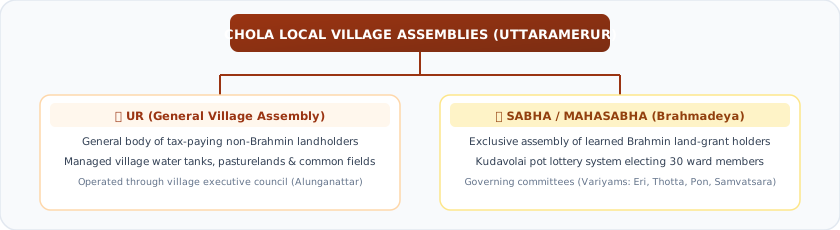
::: theorem Kudavolai Electoral System The Uttaramerur inscription details the Kudavolai system: candidates' names written on palm leaves were placed in an earthen pot (Kudam) and drawn by a young child to form administrative committees (Variyams: Eri-variyam for lakes/irrigation, Thotta-variyam for gardens, Pon-variyam for gold/treasury). :::
Check Your Mastery
⚡ Concept Quick-CheckTest Your Conceptual Intuition
The famous Uttaramerur temple inscriptions (919 and 921 CE) providing detailed rules for village committee elections belong to the reign of which Chola monarch?