Chapter 4: The Mughal Empire: Mansabdari, Jagirdari & Sulh-i-Kul
1. Gunpowder Revolution & Babur to Sher Shah Suri
- First Battle of Panipat (April 21, 1526): Babur defeated Ibrahim Lodi utilizing field-artillery cannons (Top-khana directed by Ustad Ali and Mustafa) and the Ottoman wheeling flank tactic (Tulughma).
- Sur Interregnum (1540–1555 CE): Sher Shah Suri introduced monumental administrative institutions adopted by Akbar:
- Standardized the silver coin Rupiya (178 grains) and copper Dam.
- Built the Grand Trunk Road (Sadak-e-Azam) from Sonargaon (Bengal) to Peshawar (Attock).
- Divided the empire into Sarkars (headed by Shiqdar-i-Shiqdaran) and Parganas.
2. Akbar’s Mansabdari & Zabt Systems
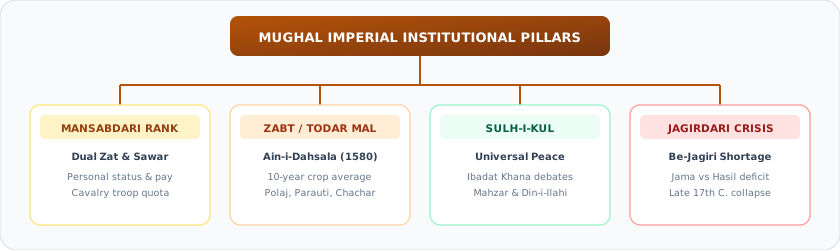
The Mansabdari System (Instituted 1571 CE)
Every imperial officer held a military-bureaucratic numerical rank (Mansab) divided into two components:
- Zat Rank: Denoted personal status, hierarchical standing, and base salary.
- Sawar Rank: Specified the exact number of mounted cavalry troopers (Sawar) the officer was obligated to maintain for imperial service.
- Du-aspa Sih-aspa rule introduced later by Jahangir (allowed sawar quota to be doubled without increasing Zat).
Raja Todar Mal’s Zabti / Ain-i-Dahsala System (1580 CE)
Land was systematically surveyed with bamboo rods equipped with iron rings (Tanab) and classified into four productivity categories:
- Polaj: Annually cultivated without rest.
- Parauti: Left fallow for 1–2 years to replenish natural fertility.
- Chachar: Left fallow for 3–4 years.
- Banjar: Uncultivated for 5 or more years.
- Revenue was fixed at one-third (
) of the ten-year average yield, payable preferably in cash.
3. Sulh-i-Kul & Religious Philosophy
- Ibadat Khana (1575): Hall of Inter-Religious Disputation at Fatehpur Sikri hosting debates among Sunni, Shia, Hindu, Jain, Parsi, and Jesuit scholars.
- Mahzar (Infallibility Decree, 1579): Recognized Akbar as Imam-i-Adil (Supreme Arbiter in religious disputes).
- Sulh-i-Kul (Universal Peace) & Tauhid-i-Ilahi (Din-i-Ilahi, 1582): Ethical syncretism based on reason, non-discrimination, and moral virtue.
4. The 18th-Century Jagirdari Crisis
Under Aurangzeb’s prolonged Deccan Wars (1681–1707), the excessive creation of new Mansabdars led to Be-Jagiri (shortage of unassigned Pai-baqi lands) and a widening discrepancy between estimated revenue (Jama) and actual collection (Hasil), culminating in imperial collapse.
Check Your Mastery
⚡ Concept Quick-CheckTest Your Conceptual Intuition
Under the Mughal land revenue administration of Akbar, land that was continuously cultivated every year without being left fallow was classified as: