Chapter 3: Industrial Capitalism, Imperialism & The Scramble for Africa
1. Classical Capitalism & The Marxist Critique
- Industrial Capitalism: Characterized by private ownership of production means, wage labor, factory discipline, and capital accumulation.
- Marxist Historical Materialism: In The Communist Manifesto (1848) and Das Kapital (1867), Karl Marx and Friedrich Engels argued that all recorded history is the history of class struggle between the owners of production (Bourgeoisie) and wage laborers (Proletariat).
2. The "New Imperialism" & The Scramble for Africa (1884–1914)
Driven by the demand for industrial raw materials (rubber, copper, petroleum, cotton) and captive export markets:
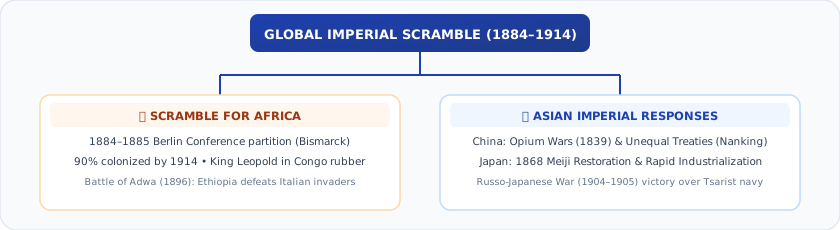
- Berlin Conference (1884–1885): Chaired by German Chancellor Otto von Bismarck; European powers carved up the entire African continent without African representation, establishing the principle of "Effective Occupation".
- By 1914: 90% of Africa was colonized, with only Ethiopia (Battle of Adwa 1896) and Liberia remaining independent.
3. East Asian Responses: Opium Wars vs. Meiji Restoration
- China (Subjugation): Defeat in the First Opium War (1839–1842) resulted in the Treaty of Nanking (ceding Hong Kong, opening treaty ports, extraterritoriality).
- Japan (Modernization): The Meiji Restoration (1868) abolished feudal Samurai rule, industrialized rapidly, adopted Western technology, and defeated Tsarist Russia in the Russo-Japanese War (1904–1905).
Check Your Mastery
⚡ Concept Quick-CheckTest Your Conceptual Intuition
Which African nation successfully defeated European imperial forces at the Battle of Adwa in 1896 to preserve its national independence?