Chapter 4: World War I, Russian Revolution & Collapse of Imperial Dynasties
1. The Causes of World War I (1914–1918)
The outbreak of the Great War resulted from structural M-A-I-N tensions:
- Militarism: Anglo-German naval arms race (Dreadnought battleships).
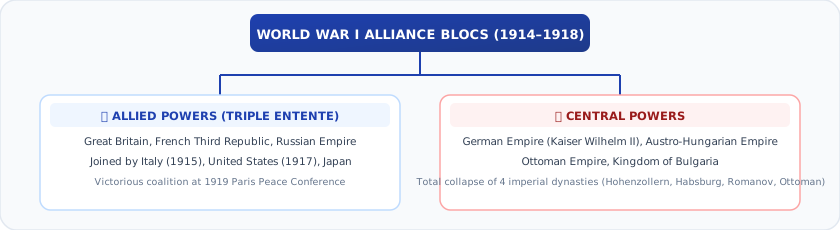
- Alliances: Triple Entente (Britain, France, Russia) vs. Triple Alliance / Central Powers (Germany, Austria-Hungary, Italy/Ottoman).
- Imperialism: Colonial friction in Africa and the Balkans.
- Nationalism: Pan-Slavism and ethnic unrest in the Austro-Hungarian Empire.
- The Spark (June 28, 1914): Assassination of Archduke Franz Ferdinand of Austria in Sarajevo by Serbian nationalist Gavrilo Princip.
2. The Treaty of Versailles (1919)
Signed on June 28, 1919, the peace settlement imposed severe terms on Germany:
- Article 231 (War Guilt Clause): Assigned sole responsibility for the war to Germany and its allies.
- Reparations: Massive financial indemnity (132 billion gold marks).
- Territorial Losses: Alsace-Lorraine returned to France; Polish Corridor created; all overseas colonies confiscated.
- Demilitarization: Rhineland demilitarized; army capped at 100,000 men with no air force or U-boats.
- League of Nations: Formed on Woodrow Wilson's Fourteen Points, but weakened by US non-entry.
3. The Russian Revolutions of 1917
- February Revolution (March 1917): Food riots and army mutinies in Petrograd forced Tsar Nicholas II to abdicate, establishing the Provisional Government under Alexander Kerensky.
- October Revolution (November 1917): Vladimir Lenin and Leon Trotsky led the Bolshevik party to seize power under the slogan "Peace, Land, and Bread!", establishing the world's first socialist state.
Check Your Mastery
⚡ Concept Quick-CheckTest Your Conceptual Intuition
Which clause of the 1919 Treaty of Versailles explicitly assigned sole moral and legal responsibility for World War I to Germany and its allies?