Chapter 5: Interwar Crises, Rise of Fascism, Nazism & World War II
1. The Great Depression (1929) & Totalitarianism
The Wall Street Crash of October 29, 1929 ("Black Tuesday") triggered a global economic collapse, shattering the Weimar Republic in Germany and discrediting liberal market models:
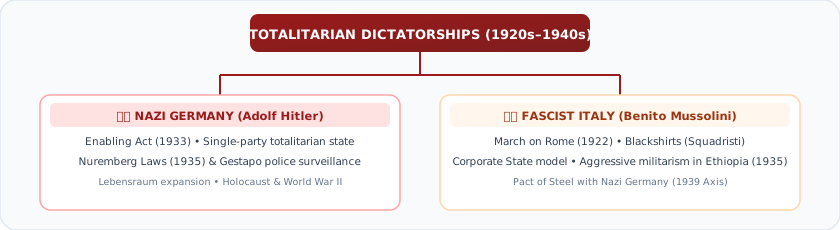
- Italian Fascism: Benito Mussolini marched on Rome (1922), establishing a single-party corporate state ("Everything in the State, nothing outside the State, nothing against the State").
- German National Socialism (Nazism): Adolf Hitler capitalized on hyperinflation, unemployment, and resentment against Versailles. Appointed Chancellor in 1933, passed the Enabling Act, and instituted the Nuremberg Laws (1935) against Jewish citizens.
2. World War II (1939–1945)
- Outbreak: German invasion of Poland on September 1, 1939 triggered declarations of war by Britain and France.
- Turning Points:
- Battle of Stalingrad (1942–1943): Catastrophic destruction of the German 6th Army by Soviet forces.
- Battle of Midway (1942): US Navy crippled Japanese carrier fleet in the Pacific.
- D-Day (June 6, 1944): Allied amphibious invasion of Normandy.
- The End of War: Unconditional surrender of Germany (May 8, 1945). Atomic bombings of Hiroshima (August 6) and Nagasaki (August 9) forced Japanese surrender (September 2, 1945).
Check Your Mastery
⚡ Concept Quick-CheckTest Your Conceptual Intuition
The Battle of Stalingrad (1942-1943) is universally regarded by military historians as the decisive turning point on the European Eastern Front because: