Chapter 2: Tribal Resistances, Peasant Uprisings & The Great Revolt of 1857
1. Popular Pre-1857 Resistances
Before the explosion of 1857, indigenous resistance against colonial land usurpation, moneylender exploitation (Dikus), and forest laws took the form of militant tribal and peasant uprisings:
- Santhal Hool (1855–1856): Led by brothers Sidhu and Kanhu Murmu in the Rajmahal hills (Damin-i-Koh) against zamindars and mahajans. Resulted in the creation of the Santhal Parganas non-regulation district.
- Munda Ulgulan (1899–1900): Led by Birsa Munda ("Dharti Aba") in Chhotanagpur to eradicate Dikus, reclaim ancestral communal land rights (Khuntkatti system), and establish a Munda Raj. Led to the Chotanagpur Tenancy Act of 1908.
- Indigo Revolt (Nil Bidroho, 1859–1860): Led by Digambar Biswas and Bishnu Biswas in Nadia (Bengal) against European planters forcing ryots into unremunerative indigo contracts. Immortalized in Dinabandhu Mitra's play Neel Darpan.
2. The Great Revolt of 1857: Causes & Outbreak
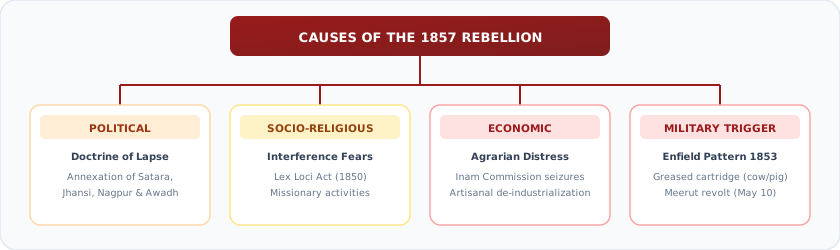
The rebellion erupted at Meerut on May 10, 1857, when sepoys mutinied, marched to Delhi, and proclaimed Mughal Emperor Bahadur Shah Zafar as the Shahenshah-e-Hindustan.
Epicenters & Leadership Matrix
| Center of Revolt | Indian Revolutionary Leader | British Suppressing General |
|---|---|---|
| Delhi | Bahadur Shah II & General Bakht Khan | John Nicholson, Hudson |
| Kanpur | Nana Saheb (Dhondu Pant), Tatya Tope, Azimullah Khan | Colin Campbell, Havelock |
| Lucknow | Begum Hazrat Mahal & Prince Birjis Qadr | Colin Campbell, James Outram |
| Jhansi & Gwalior | Rani Lakshmibai ("Main apni Jhansi nahi doongi") | Sir Hugh Rose ("Best and bravest leader") |
| Arrah (Bihar) | Kunwar Singh (Zamindar of Jagdishpur) | William Taylor, Vincent Eyre |
| Faizabad | Maulvi Ahmadullah Shah (The 'Lighthouse of Rebellion') | Colin Campbell |
| Bareilly | Khan Bahadur Khan | Colin Campbell |
3. Aftermath: Government of India Act 1858 & Peel Commission
- End of Company Rule: Crown assumed direct sovereignty over India via the Queen's Proclamation (November 1, 1858) read at Allahabad by Lord Canning (first Viceroy).
- Abolition of Board of Control & Court of Directors: Replaced by the Secretary of State for India assisted by a 15-member Council of India.
- Peel Commission (1859): Reorganized the British Indian Army on the policy of "Divide and Rule" / counterpoise of natives; increased European-to-Indian soldier ratio (
in Bengal; in Madras/Bombay) and segregated regiments by martial race stereotypes (Sikhs, Gurkhas, Pathans).
Check Your Mastery
⚡ Concept Quick-CheckTest Your Conceptual Intuition
Which British General, who commanded the imperial forces against Rani Lakshmibai at Jhansi and Gwalior, described her as 'the bravest and best military leader of the rebels'?